Supervision grounded in real caseload challenges, not generic checklists.
Individual and group clinical supervision for licensure candidates and licensed clinicians — built around the cases you're actually carrying, the questions you're actually sitting with, and the licensure requirements you actually need to meet.
- Format: Individual & group
- For: Licensure candidates & licensed clinicians
- Licensed in: NY, NJ, IN, FL
Supervision that meets the work you're actually doing.
Case conceptualization
Working through the clients and cases on your caseload right now — diagnosis, treatment planning, and the moments where you're stuck.
Ethical & legal questions
Scope of practice, documentation, mandated reporting, and the gray-area situations that don't have a clean answer in a textbook.
Licensure hours & requirements
Tracking toward your state's licensure requirements, with documentation handled the way your board actually expects it.
Clinical skill-building
Deepening specific modalities and interventions — not generic theory, but how they actually play out in session with your clients.
Countertransference & burnout
The parts of the work that don't show up on a treatment plan — what a case is bringing up for you, and how to stay sustainable in this field.
Private practice readiness
For candidates heading toward independent practice — what licensure actually unlocks, and how to think ahead to building your own caseload.
Supervision here is built for clinicians who want real oversight, not a signature.
This is for you if…
YesYou're carrying an active caseload and want supervision grounded in real cases, not generic theory.
You've had supervision before that felt like a rubber stamp, and you want more than a signature at the end of the hour.
You're working toward licensure and need hours that actually count, on a timeline that fits your state board's requirements.
You're drawn to specialized work — sex therapy, IFS/IFIO, EMDR, hypnotherapy, brainspotting, or KAP — and want a supervisor who actually practices in those spaces.
You want to build the clinical and business skills to eventually run your own practice — not just survive to licensure.
You want more than supervision — you want to walk away actually knowing how to build and operate a private practice.
You want your hours to count toward AASECT's CST certification, too — not just licensure — plus discounted access to Sex Therapy continuing education along the way.
This is NOT for you if…
NoYou're looking for the minimum hours with the least amount of engagement possible.
You don't want to be asked hard questions about your clinical work.
You're not currently seeing clients and have no active caseload to bring into sessions.
You want a supervisor who tells you what you want to hear instead of what you need to hear.
You're hoping supervision happens to you, without showing up prepared to talk about your cases.
You're just looking for the cheapest option you can find.
You're already happy with the supervision you currently have.
From first conversation to ongoing supervision.
Free consultation
We talk through your caseload, your supervision goals, and what you need to meet — no commitment, just a conversation to see if it's a fit.
Choose your format
Weekly or biweekly individual supervision, or a small group format — whichever matches your learning style, schedule, and budget.
Ongoing supervision
Regular sessions built around your actual caseload, with documentation handled for your state's licensure board along the way.
I teach what other supervisors won't.
Most supervision is just hours — a signature toward licensure and not much else. This isn't that. As an AASECT-approved Certified Sex Therapist (CST) supervisor, the hours you complete here count toward both your state licensure requirements and AASECT's CST certification — so depending on when you start, you could reach full AASECT certification around the same time you become fully licensed, instead of starting that clock all over again afterward.
Areas of specialization
Supervision grounded in focused clinical expertise, not generalist checklists:
- IFIO Intimacy From the Inside Out — an IFS-based couples model for working with the parts that show up in relational conflict and disconnection.
- IFS Internal Family Systems — working with the parts that make up a client's internal system to build self-leadership and resolve internal conflict.
- Sex Therapy Clinical work with sexual concerns, dysfunction, desire discrepancy, and intimacy — AASECT-aligned, CST-track supervision.
- Hypnotherapy Clinical hypnosis integrated into treatment for trauma, anxiety, pain, and habit change.
- EMDR Eye Movement Desensitization and Reprocessing — a structured, evidence-based approach to processing trauma.
- Brainspotting A brain-body approach that uses eye position to access and process stuck trauma the talking alone can't reach.
- KAP Ketamine-Assisted Psychotherapy — combining ketamine treatment with therapeutic support to help process what's been inaccessible through talk therapy alone.
Private Practice Launch Accelerator
Full access to the Accelerator course while you're in supervision — so when you're ready to leave and go independent, you already know how to build and run a fully private-pay practice. Most supervisors hand you a signature and a goodbye; this hands you a business.
Continuing education discounts
Discounted rates on Sex Therapy CE courses through the Collective — so building toward AASECT certification doesn't mean paying full price twice over.
Professional Association Membership
Access to the Professional Association Membership provided through Laike Rising Collective — community, resources, and credibility that extend past the hours you spend in supervision.
These are the extras that come with supervising here — you won't get them from a supervisor working outside the Collective.
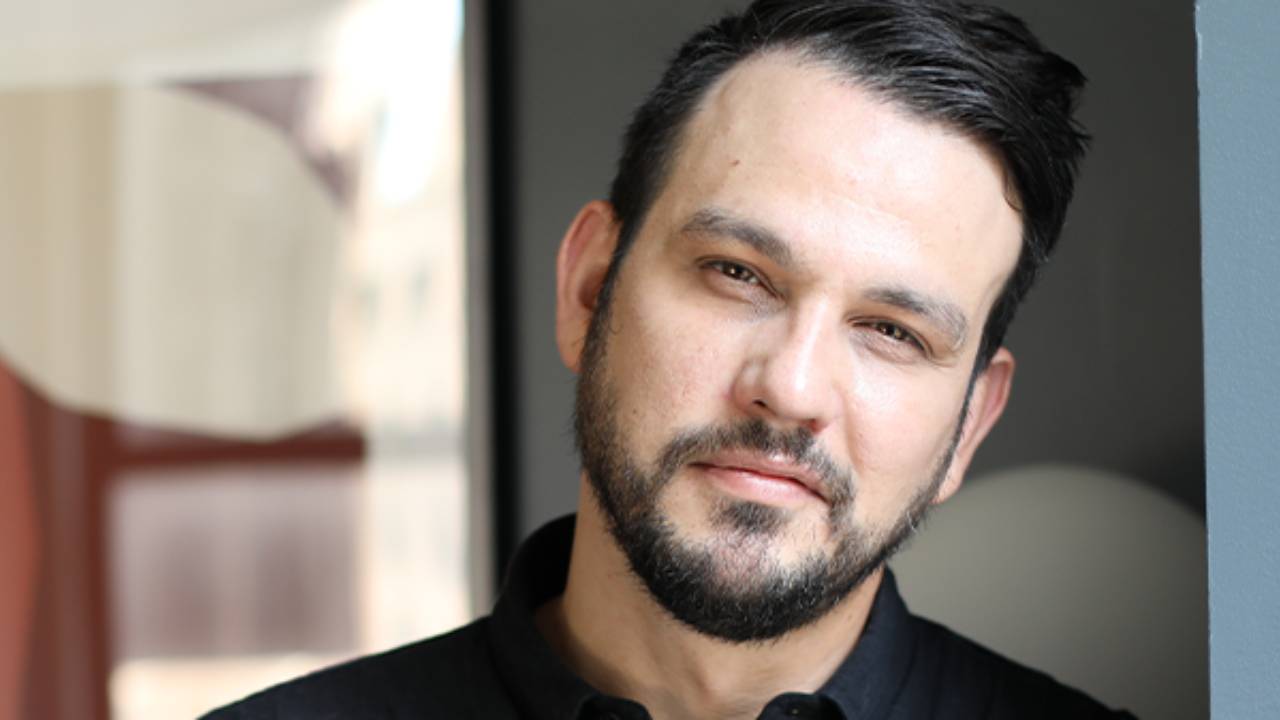
Led by a clinician who's done the work.
Dr. Richard Mills-Malangone has spent more than two decades in private practice — building it, running it, and supervising the clinicians coming up behind him. Supervision here isn't theoretical; it's grounded in two decades of actually sitting across from clients and running a practice.
What to know before you book.
Clinical supervision is governed by your state licensing board, so the specifics matter. Here's what most clinicians ask before getting started.
How do I know what my state requires for supervision?
Your state's licensing board (for example, your state Board of Social Work, Board of Behavioral Sciences, or equivalent) publishes the specific rules for your license type — total supervised hours, how many must be individual vs. group, how many per week or month qualify, and how long supervision can count toward licensure.
During your consultation, we'll go over what your board requires for your specific license track, and I'll let you know upfront whether I'm able to meet those requirements for you. If I'm not an approved supervisor in your state, or your board requires something I can't provide, I'll tell you directly rather than take you on.
Am I required to be licensed in the same state you're supervising from?
It depends on your state's board — some states allow supervision across state lines (especially via telehealth), others require the supervisor to hold an active license in the supervisee's state. We'll confirm this together before starting, and you're always welcome to double-check with your board directly.
What's required of me as the supervisee?
In general, you'll need to be carrying an active clinical caseload, come prepared to discuss specific cases (not just general questions), keep your own documentation of hours for your board, and maintain the session frequency your state requires. Beyond the minimum, the clinicians who get the most out of supervision come ready to be honest about what's actually happening in the room — not just what went well.
How often are supervision sessions, and how long do they last?
Most clinicians meet weekly or biweekly, individually or in a small group, depending on your state's required cadence and your own schedule. We'll land on a format and frequency that satisfies your licensure requirements during your consultation.
How does supervision here count toward both licensure and AASECT's CST certification?
As an AASECT-approved Certified Sex Therapist (CST) supervisor, the hours you complete with me can count toward both your state licensure requirements and AASECT's certification requirements at the same time — rather than completing one, then starting the clock over for the other. Depending on when you start and your existing hours, this can mean reaching full AASECT certification around the same time you become fully licensed.
Do I need to be pursuing sex therapy certification to work with you?
No. Supervision here supports general clinical licensure first — the dual-counting toward AASECT CST certification is an added benefit if that's a path you're interested in, not a requirement to start.
What does supervision cost?
Rates depend on format (individual vs. group) and frequency. We'll go over current pricing during your free consultation so you have a clear answer before committing to anything.
How do I get started?
Book a free 15-minute consultation below. We'll talk through your state's requirements, your current caseload, and your goals, and confirm whether we're the right fit before anything is scheduled.

Book your free 15-minute consultation.
We'll talk through your caseload, your supervision goals, and whether we're the right fit — no pressure, just a conversation.
Supervision seats are limited — consultations are booked on a first-come basis.
